
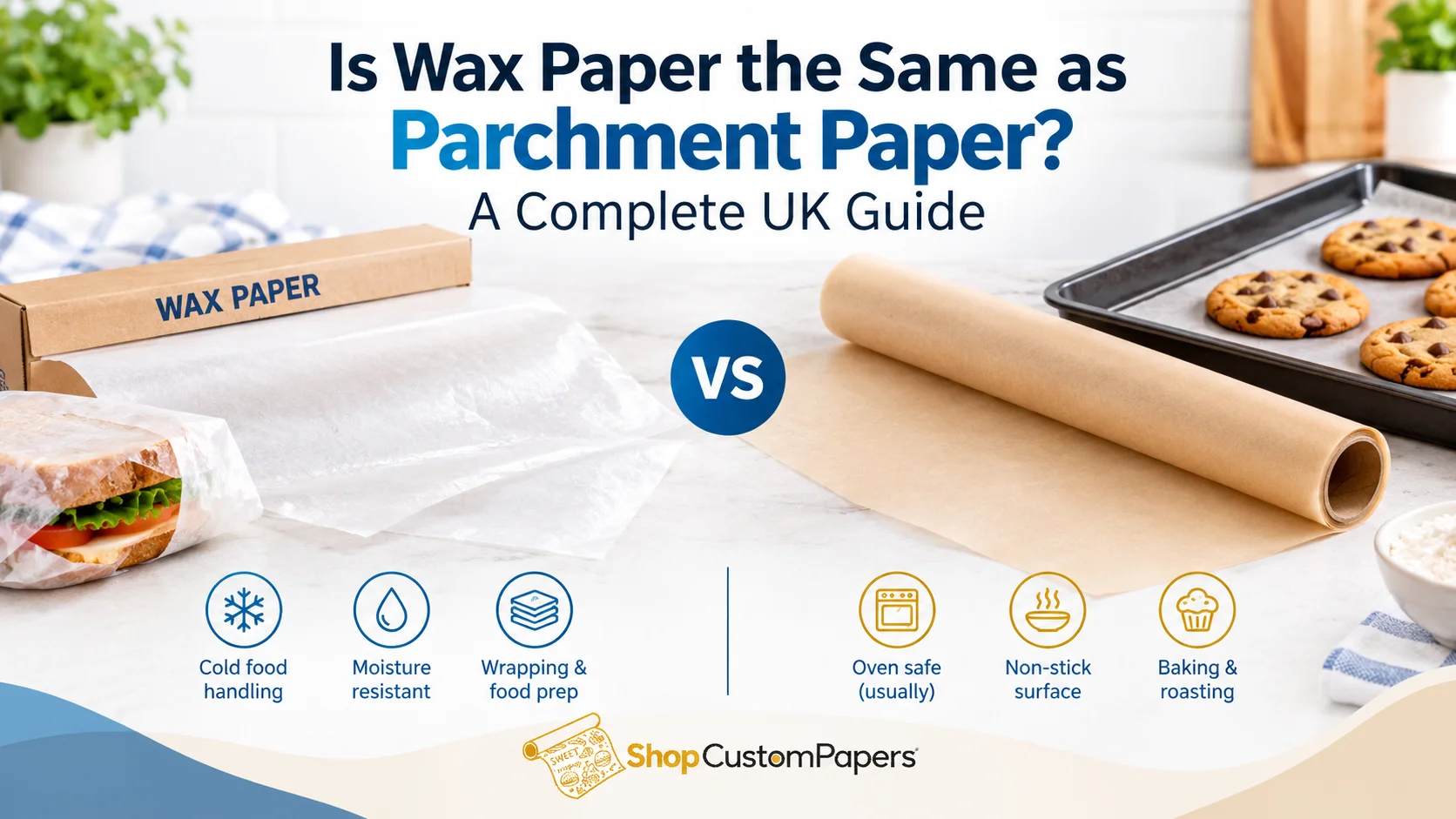
Wax paper and parchment paper may look similar, but they are designed for different purposes. Both are commonly used in kitchens, bakeries, restaurants, and food businesses. However, their coatings, heat resistance, and suitable applications differ significantly.
If you are wondering, is wax paper the same as parchment paper, the simple answer is no. Wax paper has a wax coating that helps prevent moisture from passing through, while parchment paper is treated to provide a non-stick surface and withstand oven heat.
Understanding the difference between wax paper and parchment paper can help you choose the right material for baking, food preparation, storage, and packaging. For businesses that need reliable food packaging materials, selecting the correct paper is also important for food safety, presentation, and everyday operations.
What Is Wax Paper?
Wax paper is a type of paper coated with a thin layer of wax, typically paraffin or another suitable wax. This coating creates a moisture-resistant surface that helps prevent food from sticking and keeps grease and moisture from easily passing through the paper.
Wax paper is useful for handling cold or room-temperature foods. It is commonly used in food preparation, wrapping sandwiches, separating food items, and lining work surfaces.
Common Uses of Wax Paper
Wax paper is suitable for several everyday food-related tasks, including:
- Wrapping food: Use it to wrap sandwiches, cheese, and other foods for short-term storage.
- Separating baked goods: Place sheets between cookies, burger patties, or other items to prevent sticking during storage.
- Preparing dough: Use it for certain cold preparation tasks where a non-stick surface is helpful.
- Food presentation: Line trays or containers when the paper will not be exposed to direct heat.
- Candy and chocolate preparation: Use it for holding cooled or setting treats, provided the temperature is suitable for the coating.
Can You Put Wax Paper in the Oven?
No. Wax paper should not be used in a conventional oven because its wax coating can melt, smoke, or potentially ignite when exposed to high temperatures or direct heat.
Although wax paper is useful for food handling and storage, it is not designed to replace oven-safe parchment paper. Always follow the manufacturer’s instructions for the specific product.
What Is Parchment Paper?
Parchment paper is a heat-resistant paper commonly used for baking, roasting, and food preparation. It is generally treated with silicone to create a non-stick surface that helps food release easily after cooking.
Unlike wax paper, parchment paper is designed to withstand oven temperatures within the limits specified by the manufacturer. It is widely used in homes, commercial kitchens, bakeries, and food production businesses.
Parchment paper is available in sheets, rolls, and customised formats for different food preparation and packaging requirements.
Common Uses of Parchment Paper
Parchment paper offers several benefits for cooking and food handling.
- Baking cookies: Helps prevent cookies from sticking to baking trays.
- Roasting vegetables: Provides a convenient surface for roasting vegetables and other foods.
- Baking pastries: Helps with preparing pastries, biscuits, and other baked goods.
- Reducing cleanup: Minimises food residue on baking trays and pans.
- Food preparation: Provides a non-stick work surface for suitable preparation tasks.
- Commercial baking: Supports consistent food handling in bakeries, cafés, and restaurants.
Can You Put Parchment Paper in the Oven?
Yes. Parchment paper is generally oven-safe when used according to the manufacturer’s temperature rating. Most standard products are suitable for typical baking temperatures, but the exact limit varies by product.
Keep parchment paper away from heating elements, open flames, and broiler elements unless the manufacturer specifically permits that use. Do not assume every parchment paper product has the same heat resistance.
Is Parchment Paper the Same as Wax Paper?
No, parchment paper and wax paper are not the same. While both can provide non-stick properties, their coatings and intended applications are different.
Wax paper relies on a wax coating to resist moisture. Parchment paper typically uses a heat-resistant treatment, such as silicone, to create a non-stick surface suitable for baking.
The main difference is heat resistance. Parchment paper is designed for oven use within its stated temperature limit, while wax paper is generally intended for cold food preparation and storage.
For example, if you are baking cookies, parchment paper is the better option. If you are wrapping a sandwich or separating chilled food items, wax paper may be more suitable.
Choosing the correct material helps avoid melted coatings, unwanted smoke, sticking food, and unnecessary waste.
Wax Paper vs Parchment Paper: Key Differences
The following comparison explains how these two papers differ in everyday use.
| Feature | Wax Paper | Parchment Paper |
|---|---|---|
| Coating | Wax coating | Usually silicone-treated |
| Heat resistance | Not intended for oven use | Oven-safe within the rated temperature limit |
| Non-stick properties | Yes, for suitable applications | Yes, particularly for baking |
| Moisture resistance | Good moisture resistance | Depends on the product, but generally suitable for baking tasks |
| Baking cookies | Not recommended in the oven | Suitable for oven baking |
| Wrapping sandwiches | Suitable for many applications | Can be used where appropriate |
| Roasting food | Not suitable for oven roasting | Suitable within product specifications |
| Separating chilled foods | Suitable | Suitable |
| Commercial kitchen use | Food handling and cold preparation | Baking, roasting, and food preparation |
The best choice depends on how you intend to use the paper. Wax paper is useful for moisture-resistant food handling, while parchment paper is the preferred option for most oven-based cooking and baking tasks.
Can You Substitute Wax Paper for Parchment Paper?
Wax paper and parchment paper are not interchangeable in every situation. Whether one can replace the other depends on the intended application.
When Wax Paper Can Be Used
Wax paper can be a practical alternative for certain non-heated tasks, such as:
- Separating cookies or other foods in storage.
- Wrapping sandwiches and selected food products.
- Covering a work surface during food preparation.
- Handling chilled ingredients where a non-stick surface is helpful.
For these applications, wax paper may perform just as well as parchment paper.
When Wax Paper Cannot Replace Parchment Paper
Wax paper should not replace parchment paper for tasks that involve oven heat. This includes baking cookies, roasting vegetables, baking pastries, and lining a baking tray that will go into the oven.
The wax coating may melt or smoke, and the paper may create a fire risk if exposed to excessive heat.
If a recipe calls for parchment paper, use an appropriate oven-safe alternative rather than substituting wax paper.
Can You Use Parchment Paper Instead of Wax Paper?
In some situations, yes. Parchment paper can often replace wax paper for separating food items, preparing certain ingredients, and providing a non-stick surface.
However, parchment paper may cost more than wax paper for tasks that do not require heat resistance. Its suitability for wrapping food also depends on the product’s intended use and food-contact specifications.
For businesses that use large quantities of paper, choosing materials according to their purpose can help control costs without compromising food handling practices.
For example, a bakery may use parchment paper for baking trays and wax paper for suitable cold food preparation tasks. A sandwich shop may prioritise food-grade wrapping materials that suit its products and service requirements.
Which Paper Is Better for Baking?
Parchment paper is generally the better choice for baking because it is designed to withstand oven heat and provide a non-stick surface.
Here is how the two materials compare for common baking tasks.
Cookies and biscuits: Parchment paper helps prevent sticking and makes it easier to remove baked goods from trays.
Cakes and pastries: Parchment paper can be used to line suitable baking pans and support easier food release.
Bread and rolls: Parchment paper can help prevent dough from sticking to baking surfaces, provided the product is suitable for the oven temperature.
Chocolate and confectionery: Wax paper may work for certain cooled or setting products, while parchment paper is also useful for suitable preparation tasks.
Roasting vegetables: Parchment paper is the appropriate choice for oven roasting within the product’s temperature rating.
For professional kitchens, selecting paper that matches the cooking method helps maintain consistent results and makes food preparation easier.
Wax Paper vs Parchment Paper for Food Packaging
Food businesses often need paper that supports safe handling, moisture management, and attractive product presentation. However, the best choice depends on the food, packaging process, and expected temperature.
Wax Paper for Food Packaging
Wax paper may be suitable for wrapping certain sandwiches, cheese products, baked goods, and chilled foods. Its coating helps resist moisture and can reduce sticking during handling.
It can also be used to separate food items during storage. Before purchasing, confirm that the paper is approved for its intended food-contact application.
Parchment Paper for Food Packaging
Parchment paper is particularly useful for bakeries, cafés, restaurants, and food manufacturers that need paper for baking and food preparation.
It can help separate pastries, line baking trays, and support the handling of suitable prepared foods. Some parchment paper products may also be used for wrapping, depending on their specifications.
Choosing Custom Paper for Your Business
Businesses purchasing food packaging materials should consider several factors before selecting a paper product:
- Food compatibility: Confirm that the material is suitable for direct contact with the intended food.
- Temperature requirements: Select a product rated for the expected heating conditions.
- Grease and moisture resistance: Consider whether the food contains oils, sauces, or excess moisture.
- Sheet size and format: Choose rolls, sheets, or customised dimensions that fit your workflow.
- Branding requirements: Determine whether custom printing is appropriate for the paper and its intended application.
- Supplier specifications: Review coating details, food-contact documentation, and handling instructions.
At Shop Custom Papers USA, businesses can explore paper options for food preparation and packaging based on their specific needs. Selecting the right paper format and material can help support consistent handling and a professional presentation.
Is Wax Paper or Parchment Paper More Eco-Friendly?
The environmental impact of wax paper and parchment paper depends on the materials, coatings, manufacturing process, and local recycling or composting facilities.
Neither material should automatically be considered recyclable or compostable simply because it is made from paper.
Wax coatings can affect how wax paper is processed, while silicone-treated parchment paper may also be unsuitable for standard paper recycling streams. Some products may be certified for particular composting systems, but others are not.
Before disposing of either material, check the packaging instructions and your local waste collection guidelines. Food contamination can also affect whether a paper product is accepted for recycling or composting.
For businesses aiming to reduce packaging waste, ask suppliers for clear information about material composition, certifications, and end-of-life disposal options.
Frequently Asked Questions
1. Is wax paper the same as parchment paper?
No. Wax paper has a wax coating and is generally used for cold food preparation, wrapping, and storage. Parchment paper is usually silicone-treated and designed for oven use within its rated temperature limit.
2. Is parchment paper the same as wax paper for baking?
No. Parchment paper is suitable for most standard baking applications when used according to the manufacturer’s instructions. Wax paper should not be used to line a baking tray in a conventional oven.
3. Can I use wax paper instead of parchment paper for cookies?
No. Wax paper is not designed for oven baking and may melt, smoke, or create a fire risk. Use oven-safe parchment paper instead.
4. Can I use parchment paper instead of wax paper?
Often, yes, for suitable food preparation and food-separation tasks. However, the best option depends on the food, intended use, and product specifications.
5. Which is better for wrapping sandwiches?
Wax paper is a common choice for wrapping sandwiches and other suitable foods because of its moisture-resistant coating. Always confirm that the product is intended for food contact and suitable for the specific application.
6. Can parchment paper go in the oven?
Yes. Parchment paper is generally oven-safe within the manufacturer’s specified temperature limit. Keep it away from open flames and heating elements.
7. Is wax paper waterproof?
Wax paper is moisture-resistant, but it should not be considered completely waterproof. Its performance depends on the coating, paper construction, and exposure conditions.
8. Can wax paper and parchment paper be recycled?
Recycling acceptance varies by product and local facilities. Wax coatings and silicone treatments may make either material unsuitable for ordinary paper recycling. Check the manufacturer’s disposal guidance and local recycling rules.
9. What is the main difference between wax paper and parchment paper?
The main difference is their coating and heat resistance. Wax paper is primarily intended for cold food handling, while parchment paper is designed for non-stick baking and other suitable heated applications.
10. Which paper should restaurants and bakeries choose?
Restaurants and bakeries may need both materials for different tasks. Parchment paper is generally preferred for baking and roasting, while wax paper may suit certain wrapping and cold food preparation needs. The final choice should depend on food-contact suitability, temperature requirements, and supplier specifications.
Final Thoughts
Wax paper and parchment paper may look similar, but they serve different purposes. Wax paper is useful for wrapping, separating, and handling suitable cold foods, while parchment paper is the better choice for baking, roasting, and other applications that require oven resistance.
When comparing wax paper vs parchment paper, focus on the intended use, heat exposure, food-contact suitability, and disposal requirements. Choosing the right material can help home cooks and food businesses handle food more efficiently while avoiding unsuitable substitutions.
For businesses looking for food paper and customised packaging options, Shop Custom Papers USA can be a starting point for exploring materials suited to their food preparation and packaging requirements.