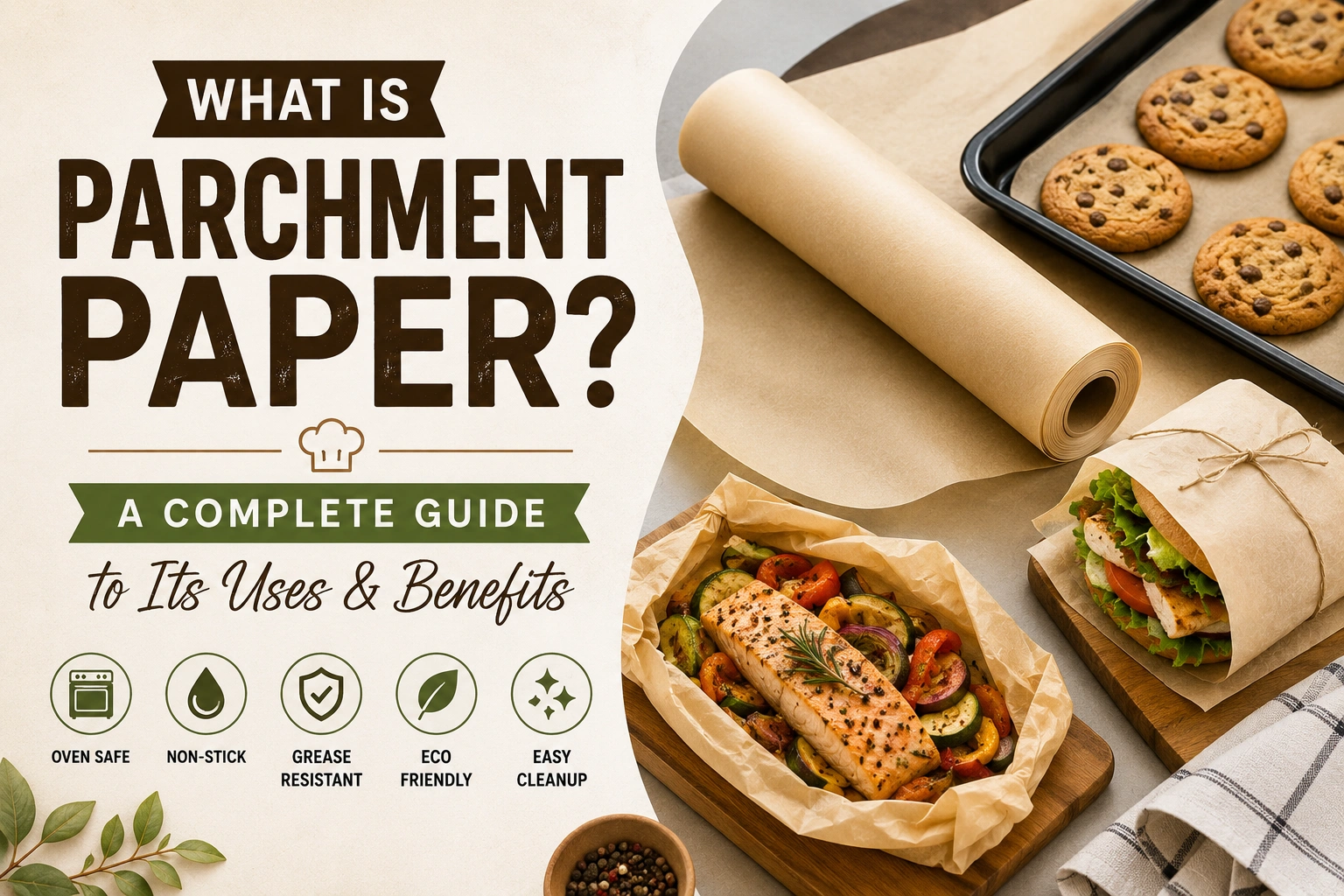
Parchment paper has become a must-have item in home kitchens, bakeries, restaurants, and commercial food businesses. Whether you’re baking cookies, lining cake pans, roasting vegetables, or packaging baked goods, parchment paper makes food preparation cleaner, easier, and more efficient.
But many people still ask questions like what is parchment paper, what is parchment paper used for, and what is parchment paper for baking.
In this guide, we’ll explain everything you need to know about parchment paper, including how it’s made, its benefits, common uses, and why it’s one of the most useful food-safe papers available today.
What Is Parchment Paper?
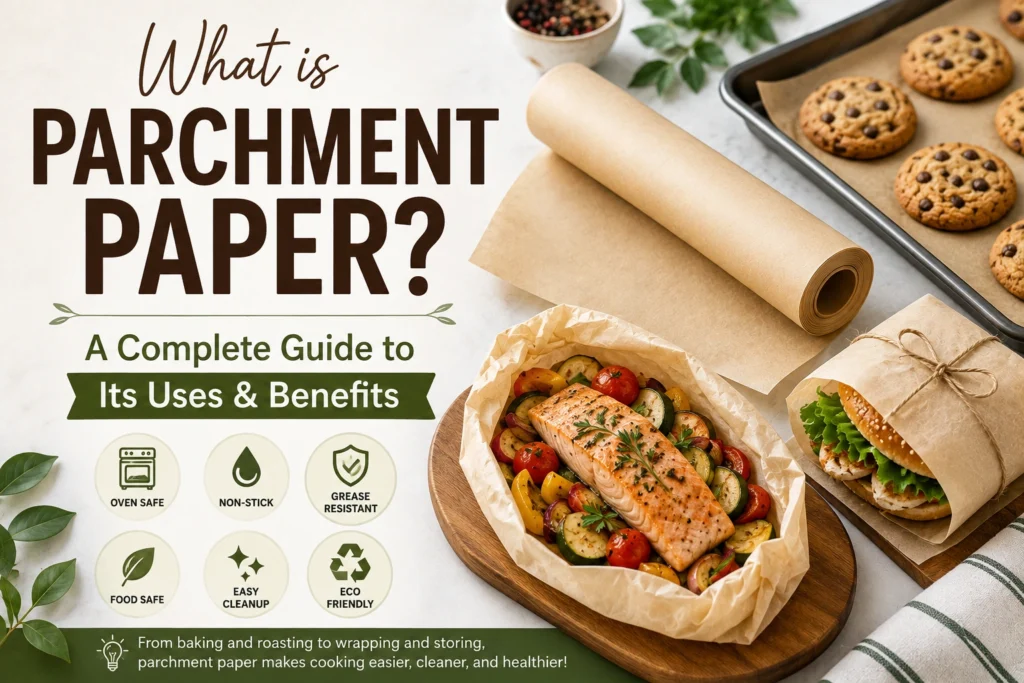
Parchment paper is a specially treated cellulose-based paper coated with food-safe silicone. This coating creates a non-stick, heat-resistant, and moisture-resistant surface that prevents food from sticking during cooking or baking.
Unlike ordinary paper, parchment paper is designed to withstand high oven temperatures without burning under normal baking conditions.
Today, parchment paper is widely used in:
- Home kitchens
- Commercial bakeries
- Restaurants
- Food manufacturers
- Catering businesses
- Coffee shops
- Pastry shops
Its convenience and versatility make it one of the most commonly used food preparation papers.
What Is a Parchment?
Before discussing parchment paper, it’s important to understand the word parchment itself.
Historically, parchment referred to writing material made from specially prepared animal skins, commonly sheep, goats, or calves. Ancient civilizations used parchment for books, manuscripts, legal documents, and artwork long before modern paper existed.
Modern parchment paper is completely different. Despite sharing the name, today’s parchment paper is manufactured from wood pulp rather than animal skin and is specifically designed for food preparation.
What Is in Parchment Paper?
Many people wonder:
What is in parchment paper?
Modern parchment paper is made from:
- Purified wood pulp fibers
- Food-safe silicone coating
- Water-resistant treatment
- Heat-resistant processing
The silicone coating creates its famous non-stick surface without affecting food flavor.
High-quality parchment paper contains:
- No wax
- No harmful chemicals
- No toxic coatings
- FDA-compliant food-contact materials (for food-grade products)
The silicone coating also helps resist grease, moisture, and high temperatures.
Parchment Paper Is Made Of
If you’re wondering parchment paper is made of what, here’s the simple answer.
Parchment paper is made of:
- Cellulose fibers from wood pulp
- Sulfuric acid treatment or specialized processing that strengthens the paper
- Food-grade silicone coating
This manufacturing process gives parchment paper several valuable properties:
- Heat resistance
- Non-stick performance
- Grease resistance
- Moisture resistance
- Improved strength
The result is a durable cooking paper that performs well even during extended baking.
What Is Parchment Paper Used For?
One of the biggest advantages of parchment paper is its versatility.
Here are the most common uses.
1. Baking Cookies
Cookies slide off easily without sticking.
Benefits include:
- Even baking
- Easy cleanup
- No greasing pans
- Better cookie texture
2. Baking Cakes
Parchment paper lines cake pans to help cakes release cleanly.
Ideal for:
- Sponge cakes
- Cheesecakes
- Birthday cakes
- Layer cakes
3. Roasting Vegetables
Lining baking trays prevents vegetables from sticking while reducing oil usage.
Great for:
- Potatoes
- Carrots
- Broccoli
- Brussels sprouts
- Mixed vegetables
4. Baking Bread
Many artisan bakers use parchment paper when baking:
- Sourdough
- Baguettes
- Dinner rolls
- Homemade loaves
It helps transfer dough into hot ovens safely.
5. Cooking Fish
Parchment paper is commonly used in the French cooking technique called en papillote, where fish and vegetables are sealed in parchment before baking.
Benefits include:
- Locks in moisture
- Enhances flavor
- Requires less oil
- Easy serving
6. Pastry Preparation
Parchment paper is excellent for:
- Puff pastry
- Croissants
- Danish pastries
- Tarts
- Macarons
7. Candy Making
Parchment paper provides a non-stick surface for:
- Chocolate
- Caramel
- Toffee
- Fudge
- Brittle
8. Food Packaging
Commercial bakeries often use parchment paper for wrapping:
- Cookies
- Brownies
- Muffins
- Pastries
- Sandwiches
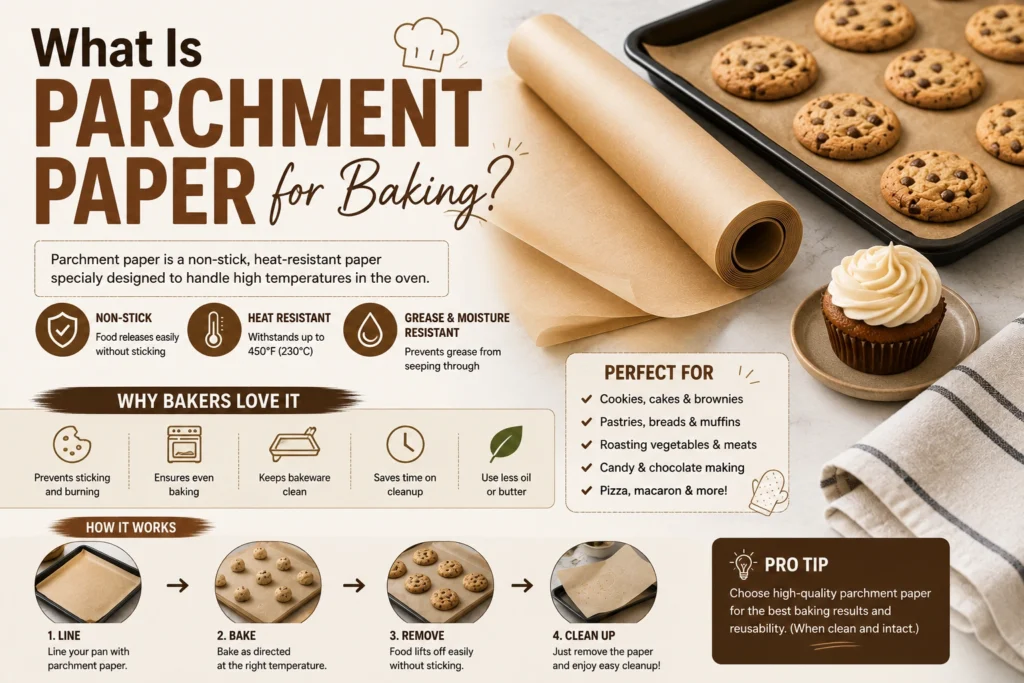
What Is Parchment Paper for Baking?
When people ask what is parchment paper for baking, the answer is simple.
Its primary purpose is to create a non-stick baking surface.
Instead of applying butter or cooking spray, parchment paper:
- Prevents sticking
- Promotes even browning
- Reduces cleanup
- Protects baking trays
- Prevents over-browning on pan bottoms
Professional bakers rely on parchment paper because it delivers consistent results with minimal effort.
What Is Parchment Paper Used for Baking?
Parchment paper is useful for nearly every baking task.
It works well for:
- Cookies
- Cakes
- Brownies
- Muffins
- Cupcakes
- Pizza
- Bread
- Cinnamon rolls
- Biscuits
- Pastries
It also makes transferring delicate baked goods much easier.
Benefits of Parchment Paper
Non-Stick Surface
Food releases easily without tearing.
Heat Resistant
Most parchment paper can safely handle temperatures up to approximately 420–450°F (215–232°C), depending on the manufacturer. Always follow the temperature limits listed on the product packaging.
Less Cleanup
Since food doesn’t stick to pans, washing up becomes much easier.
Reduces Oil Usage
Many recipes require little or no added grease when using parchment paper.
Even Baking
Parchment paper helps distribute heat more evenly across the baking surface.
Food Safe
Quality parchment paper is designed specifically for direct food contact.
Versatile
Suitable for:
- Baking
- Roasting
- Wrapping food
- Freezing
- Layering baked goods
- Food presentation
Can Parchment Paper Go in the Oven?
Yes.
Parchment paper is specifically designed for oven use.
However:
- Avoid direct contact with oven flames.
- Do not place it under a broiler unless the manufacturer states it is safe.
- Never exceed the recommended maximum temperature.
Is Parchment Paper Reusable?
Sometimes.
If the paper remains clean and undamaged after baking, it can often be reused for another batch of similar baked goods.
You should replace it if it becomes:
- Burned
- Torn
- Brittle
- Heavily greased
- Soiled with food residue
Parchment Paper vs. Wax Paper
| Feature | Parchment Paper | Wax Paper |
|---|---|---|
| Heat Resistant | Yes | No |
| Oven Safe | Yes | No |
| Non-Stick | Yes | Yes |
| Silicone Coating | Yes | No |
| Wax Coating | No | Yes |
| Baking Use | Excellent | Not recommended |
Wax paper should never be used for baking because the wax coating can melt or smoke when heated.
Industries That Use Parchment Paper
Parchment paper is widely used in:
- Bakeries
- Cafés
- Restaurants
- Pizza shops
- Catering companies
- Hotels
- Food manufacturers
- Home kitchens
- Meal prep businesses
- Gourmet food brands
Tips for Using Parchment Paper
- Cut the paper to fit your baking pan.
- Use parchment to line cake pans before adding batter.
- Secure the corners when working with lightweight paper.
- Keep parchment away from direct flames.
- Store it in a cool, dry place to maintain its quality.
Frequently Asked Questions
What is parchment paper?
Parchment paper is a heat-resistant, non-stick paper made from wood pulp and coated with food-safe silicone. It is commonly used for baking, roasting, and food preparation.
What is a parchment?
Traditionally, parchment was a writing material made from animal skin. Modern parchment paper is different and is produced from treated wood pulp for culinary use.
What is in parchment paper?
Parchment paper contains cellulose fibers from wood pulp and a food-safe silicone coating that provides non-stick, grease-resistant, and heat-resistant properties.
Parchment paper is made of what?
It is made from specially processed wood pulp and coated with food-grade silicone to improve strength and cooking performance.
What is parchment paper used for?
Parchment paper is used for baking, roasting, wrapping baked goods, lining baking trays, cooking fish, preparing pastries, and preventing food from sticking.
What is parchment paper for baking?
It creates a non-stick baking surface, helps baked goods cook evenly, reduces the need for oil or butter, and makes cleanup easier.
Can parchment paper replace greasing a pan?
In many baking recipes, yes. Parchment paper often eliminates the need to grease pans, although some recipes may still recommend lightly greasing the sides of cake pans.
Is parchment paper biodegradable?
Most unbleached parchment papers are biodegradable, but silicone-coated parchment paper may decompose more slowly. Check the manufacturer’s disposal guidance for the specific product.
Final Thoughts
Parchment paper is one of the most practical tools for both home cooks and professional food businesses. Made from specially processed wood pulp and coated with food-safe silicone, it provides a reliable non-stick, grease-resistant, and heat-resistant surface for baking and cooking.
Whether you’re baking cookies, roasting vegetables, preparing artisan bread, or packaging fresh pastries, parchment paper simplifies the process while improving results. Its ability to reduce sticking, minimize cleanup, and promote even baking makes it an essential kitchen staple for everyday cooking and commercial food production alike.